
Welcome to the Belém Health Action Library!
This living library showcases diverse and cross-cutting actions that health systems around the world are taking to adapt, build resilience, and protect communities in the face of climate change. It highlights real-world examples of innovation and impact - showcasing what works, what’s been learned, and how others can follow suit.
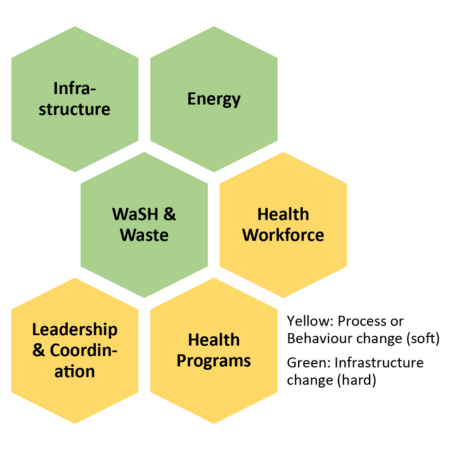
This collection was developed to complement the Belém Health Action Plan and the COP30 Special Report on Health and Climate Change. Cases featured in this library are tagged according to the exposures they address, how they relate to the Belém Health Action Plan, and their alignment with components of the WHO Operational framework for building climate-resilient and low-carbon health systems.
Have an intervention to share? Submit your initiative to atach@who.int - and contribute to the growing global evidence driving climate-resilient health systems.
This library was curated by the NUS Centre for Sustainable Medicine in collaboration with the World Health Organization, the Ministry of Health of Brazil and ATACH.
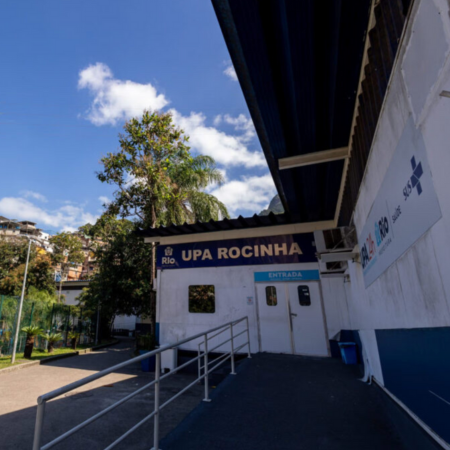
Saving Carnival, saving lives: Inside Rio’s heat response
07.11.2025The Extreme Heat Response Protocol of June 2024 was implemented in Rio de Janeiro to reduce heat stress by integrating health and climate data. Resulting forecasts can help cities prepare for extreme heat, but must be supported by strong collaborations across policymakers, scientists and healthcare leaders to succeed.

Integrating climate change into mental health policy
07.11.2025Addressing mental health in the context of climate change is of key policy interest in Viet Nam. This interest led to the National Plan to Prevent and Control Non-Comunicable Diseases and Mental Health Disorders which addresses prevention and management of mental health. The plan is being incorporated into key policy documents, and contributes to technical and expert-informed policy around mental health amidst climate change across the country.
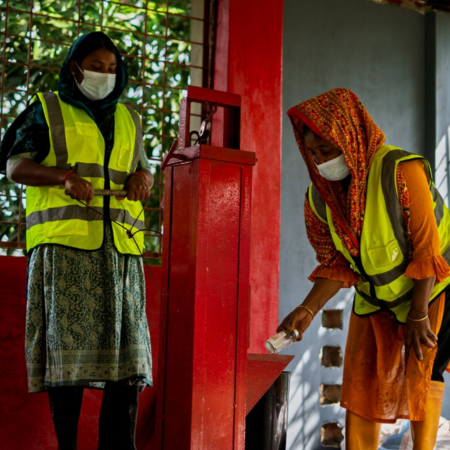
Strengthening community and health system resilience to climate change in Bangladesh
07.11.2025Community resilience projects in Bangladesh were implemented to enhance resilience for women, newborns, and adolescents in three districts. The interventions address behaviours and practices at both the individual and institutional level, embodying a systems approach to resilience for these vulnerable groups.
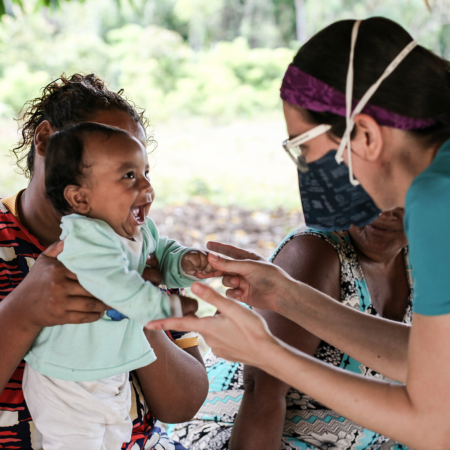
Radical listening for health and climate
07.11.2025Health inequity in Indoneisa is heavily burdened by Indigenous and local communities who lack access to affordable healthcare, and are exposed to environmental injustices that shape their livelihoods. Through methods that centre and priortise the needs of those most vulnerable to climate change, Health in Harmony partnered with vulnerable groups in Indonesia to co-design community-led solutions that can help address drivers of health inequity faced by these groups, resulting in impactful and locally relevant approaches to improving health for all.
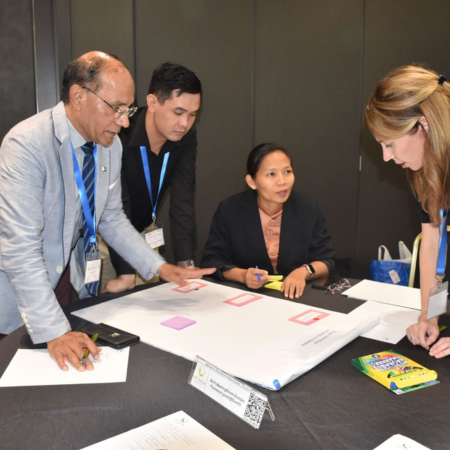
Strengthening collaboration for effective vector-borne disease control
07.11.2025This multi-country initiative to strengthen malaria and vector-borne disease control was organised by the APMEN Climate, Environmental Change and Malaria Special Interest Group. The initiative undertook public engagement activities and knowledge exchange to integrate climate resilience into vector surveillance. With local perspectives and cross-sectoral collaboration at the heart of the programme, this intervention aided in the identification of policy and funding gaps that limit responses to climate-related health threats.
A climate vulnerability and capacity assessment in Chad
07.11.2025A rural hospital in Chad exemplifies how collaborative and multi-level vulnerability and adaptation assessments can help develop locally-relevant and practical solutions to enhance climate resilience. Engagement strategies such as cross-sectoral stakeholder engagement workshops and the use of international frameworks on health system resilience demonstrates the potential that collaboration and mutual language holds for resilience building in most affected areas and communities.

Addressing health impacts of indoor heat in Canada
06.11.2025The Canadian Coalition for Green Health Care developed a national initiative that uses locally tailored approaches to address the impacts of indoor heat on vulnerable populations. Heat adaptation measures were taken in health facilities across the country, ranging from the development of green infrastructure to the installation of portable fans and user education to increase preparedness, safety and care continuity for extreme heat.

Standards for official statistics on climate-health interaction
06.11.2025To support adaptation to national and local contexts, strengthen statistical capacity and inform policymaking, the Standards for Official Statistics on Climate-Health Interaction (SOSCHI) project will serve as a globally generalisable statistical framework to help coordinate surveillenace and monitoring of climate-related health impacts. Wide-ranging collaboation and engagement with leading scientific experts and international organisations has augmented the project's implementation and global relevance.

Ensuring health service continuity through the “Four-on-the-Spot” framework in Viet Nam
06.11.2025Viet Nam formalised four principles for health sector disaster preparedness: local command, local forces, local resources, and local logistics. By integrating these principles into disaster adaptation plans, local contingency plans are not only better equipped to respond to disasters, but each response is effectively tailored to each province.

Climate-resilient and sustainable healthcare waste management systems in South Asia
06.11.2025This multi-country initiative aims to strengthen healthcare waste management systems to address gaps in capacity and infrastructure in Bangladesh, Bhutan, and the Maldives. The development of infrastructure and health worker training, combined with digital waste tracking systems and cross-sectoral collaboration helped this initiative reach front line workers and vulnerable communities, while overall enhancing resilience across South Asia.