
Welcome to the Belém Health Action Library!
This living library showcases diverse and cross-cutting actions that health systems around the world are taking to adapt, build resilience, and protect communities in the face of climate change. It highlights real-world examples of innovation and impact - showcasing what works, what’s been learned, and how others can follow suit.
This collection was developed to complement the Belém Health Action Plan and the COP30 Special Report on Health and Climate Change. Cases featured in this library are tagged according to the exposures they address, how they relate to the Belém Health Action Plan, and their alignment with components of the WHO Operational framework for building climate-resilient and low-carbon health systems.
Have an intervention to share? Submit your initiative to atach@who.int - and contribute to the growing global evidence driving climate-resilient health systems.
This library was curated by the NUS Centre for Sustainable Medicine in collaboration with the World Health Organization, the Ministry of Health of Brazil and ATACH.
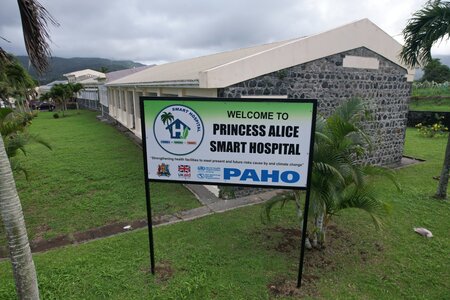
An Adaptive and Sustainable Health System for a Changing Climate in Grenada
Grenada is adapting its health system to key climate-health risks through strategic policy alignment, stakeholder engagement, capacity building, resilient infrastructure and resource mobilization.
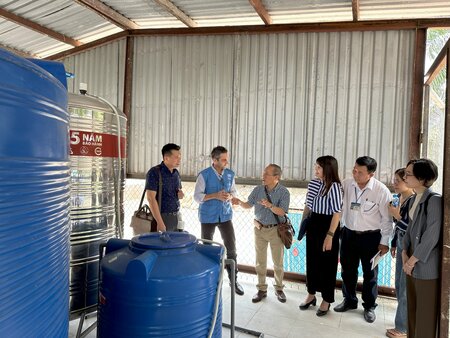
Local implementation of the climate-resilient and environmentally sustainable health care facilities (CRESHCF) Framework in Viet Nam
Viet Nam is piloting locally-adapted interventions for climate-resilient and environmentally sustainable health care facilities, with the intention of developing national guidelines for facilities to serve their communities more safely and sustainably.
Climate Resilient Infrastructure for Basic Services (CRIBS) in Nigeria
Nigeria adopts a partnership approach to developing and scaling climate resilient and environmentally sustainable primary health care and education facilities.
Monitoring and surveillance of climate risks on health in Mozambique
Mozambique is developing climate services for health focusing on key climate-sensitive diseases identified as part of its Vulnerability and Adaptation assessment and included in its Health National Adaptation Plan.

Building Resilient Health Systems in Pakistan through Equity-Centered Adaptation
Pakistan adopts a locally-led, gender and equity-driven approach to build resilience to key climate-health risks.

Developing a climate-based tool to identify dengue and leptospirosis risks in Southeast Asia
The ECOsystem MOdification and emerging infectious diseases Risk Evaluation (ECOMORE) II project helps authorities in Cambodia, Laos, Viet Nam, Myanmar and the Philippines better prevent and respond to climate-sensitive infectious disease outbreaks.
Building National Capacity on Climate Change Adaptation for Health in Canada
The HealthADAPT program supports health authorities across Canada in building their capacity for addressing climate and health risks. The program supports with tailored approaches, stakeholder engagement, networking, health equity considerations and securing resources and data for decision-making.
Legal framework on Climate Change in the Health Care Sector of Georgia
Georgia is making strides in policy development to address health risks posed by climate change, including on extreme heat and risks to the health system.
Advancing Evidence-Based and Coordinated Climate Health Action in Uganda
Uganda is working to implement its Health National Adaptation Plan (HNAP) through establishing coordination mechanisms on climate and health, integrating climate data into health information systems, targeting dissemination efforts and mobilizing resources.
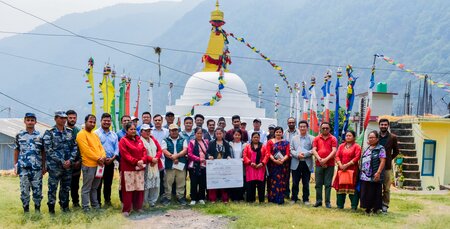
Enhancing Health Workforce Capacity for Climate Action in Nepal
Nepal is advancing multiple policies and strategies to build climate resilience in the health sector and beyond, with a particular focus on institutional strengthening, capacity development, public awareness and cross-sectoral engagement.