
Bridging Amazonian Indigenous Knowledge and Climate Science
Categories: Action Line 2: Evidence-based policy strategy and capacity building, Social participation, Health equity and climate justice, Assessments of climate and health risks and GHG emissions, Climate-informed health programmes, Climate-related emergency preparedness and management, Management of environmental determinants of health, Drought, Floods, Food and water insecurity, Health systems wide resilience, Heat and cold, Vector distribution and ecology, Wildfires
Organizations: International Federation of the Red Cross and Red Cresent Societies and The Nature Conservancy
Country: Amazonian Countries, with initial efforts in Colombia, Bolivia and Ecuador

The intervention
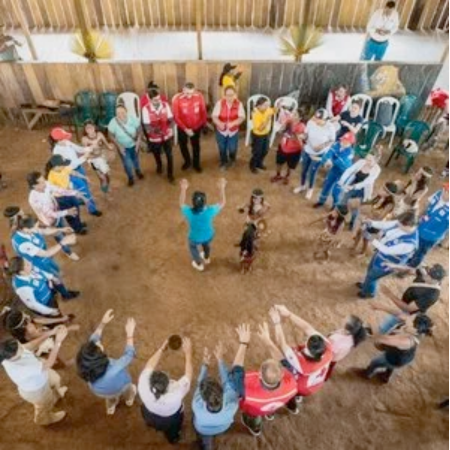
The Amazon Alliance (2025-2035), formed by the Red Cross and Red Crescent Societies, the International Federation of the Red Cross (IFRC), and The Nature Conservancy, addresses socio-economic, environmental, and climate crises across Amazonian countries, beginning in Colombia, Bolivia, and Ecuador. Through community participation and the Amazon Knowledge Systems Dialogues, the initiative fosters equitable decision-making and integrates disaster risk management, mental health, and climate-smart livelihoods. By co-creating sustainable, locally-led solutions that bridge scientific and traditional knowledge, the Alliance strengthens community resilience and promotes health equity in the world’s most climate-sensitive region.
Success factors
Success lies in broad, inclusive collaboration among humanitarian, environmental, and Indigenous actors. The Amazon Knowledge Systems Dialogues enabled shared evidence and mutual respect between traditional and scientific communities. Joint leadership by IFRC, The Nature Conservancy, and local societies ensured that adaptation priorities emerged from communities themselves. Integrating public health, disaster management, and climate-smart livelihoods created a holistic resilience framework. The Alliance’s participatory model fostered trust, cross-sector commitment, and region-wide ownership, making it a replicable platform for climate and health action.
Recommendations
Replication requires multisector partnerships combining humanitarian, health, and environmental expertise. Sustained dialogue between healthcare systems and communities strengthens mutual accountability and cultural relevance. Nature-based approaches should complement traditional medical systems, linking water, food, mental health, and youth engagement. Building a culture of risk awareness and local disaster management capacity is essential. Prioritising Indigenous knowledge integration ensures continuity, equity, and credibility. Alliances that transcend geography and sectoral boundaries create the systemic resilience needed to confront climate-driven health challenges.
Click here to return to the Belém Health Action Library