
Climate and Health Responder Course: Disaster Risk Reduction and Adaptation in the Americas and the Caribbean
Categories: Climate change & health Vulnerability & Adaptation Assessments, Health National Adaptation Plans, Action plans for sustainable low carbon health systems, Americas (Pan American Health Organization), Financing, Climate resilient health systems, Low carbon sustainable health systems, Supply chains, Healthy climate action in other sectors, Nutrition
Publisher: Global Consortium on Climate and Health Education (GCCHE), Columbia University
Online, via Zoom
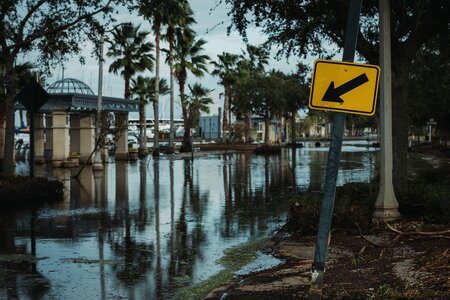 Photo credit: Connor Scott McManus
13 October – 1 December 2026 Tuesdays and Thursdays
Health systems across the Americas and the Caribbean are on the frontlines of worsening climate and disaster risk.
This free, 14-session, certificate-based course equips health professionals with the knowledge and tools to identify risk drivers, reduce vulnerabilities, strengthen preparedness, and support risk-informed decision-making to protect health across the region's most pressing hazards — extreme heat, wildfires, floods, hurricanes, drought, and climate-sensitive infectious disease.
The course is especially timely given a predicted strong to very strong El Niño this season.
All health professionals are welcome.
The course runs Tuesdays and Thursdays, October 13 – December 1, 2026, from 2:00–3:30 PM EST, with the exam period from December 1 - December 8, 2026.
Sessions are available in English, Spanish, and Portuguese and live captions will be available in French.
Click here for more information.
The Climate and Health Responder Course: Disaster Risk Reduction and Adaptation in the Americas was developed through a collaboration among the Global Consortium on Climate and Health Education (GCCHE), Pan American Health Organization (PAHO), United Nations Office for Disaster Risk Reduction – Regional Office for the Americas and the Caribbean (UNDRR), Inter-American Institute for Global Change Research (IAI), Ministry of Health of Brazil (Ministério da Saúde), Health Canada (HC/SC), Latin American and Caribbean Hub for Climate Change and Health (CLIMAS), International Federation of Red Cross and Red Crescent Societies (IFRC), Pacific International Center for Disaster Risk Reduction, and EarthMedic and EarthNurse Foundation for Planetary Health.